Meet Lynette Dakin, Executive Director of Strike A Light, as she reflects on her experience becoming a part of the organisation.
Hello! This was meant to be my “6 months in the job” blog. It’s actually my “9 months (ish) in the job” blog. And this perhaps articulates better than I can the role of Executive Director.
I didn’t know what would be useful to write about. I think there are a lot of blogs/twitter threads of the plights of arts management. So I hope I won’t make this one so gloomy. This is just how I’ve found my first ED role so far with some notes about what I’ve found the job is really about, in the hope that it might be helpful to someone, somewhere thinking of going for their first one.
This is my first ED role and it sort of happened without me really realising. When talking to my manager at Arts Council (I was doing a mat cover RM role at the time) about job roles he said something along the lines of “you’d be great at somewhere like Strike a Light”. 2 days later, SAL advertised for an ED role. Some sort of destiny? I doubted I could do the role but the sound of the organisation, its ethos and mission was completely on point. I grew up in Sharpness (it’s a dockyard in Gloucestershire, don’t worry no one knows it either) and spent my childhood in Gloucester & it felt in some sort of way I was coming home.
I didn’t actually know if I wanted to be an ED and was completely sure I wouldn’t get the job. It’s important to say I’d applied to lots of other jobs, many I thought sounded great, which I didn’t get interviews for. If it wasn’t for a very encouraging manager and a supportive partner I’m not sure I would have actually completed the whole process for this role. Sometimes it is just the right place, right time & right organisation but it’s hard to remember that when you’re on “Personal Statement version 12”.
So when I got the job I was completely amazed. What helped slightly with my imposter syndrome was that the interview process was very detailed and included 2 tasks. I’d recommend this to anyone recruiting for roles like this- it puts you both at ease that you’ve done something real to see if you can do the job. But my word I was a sleep-deprived nervous husk in a blazer when I arrived for my first day.
Anyway, I’m into the swing of it a bit now and here are 10 reflections on the last 9 months. Some of it may just be relevant to me and how I am working.
- I should be better at excel than I am. Also people always tell me I should love it (!?) and I don’t. You aren’t an accountant and weren’t trained as one. So go easy on yourself. And if in doubt, color coding works well.
- Your most important job is making sure people are ok. So make time for it even when you are furiously typing a funding report. The team, and their welfare, comes first in everything.
- Getting a good board is really tough and will take time. You are asking people to volunteer their time. Put time into the recruitment, it’s worth it.
- HR will sit with you but having someone external to go to for HR on an adhoc basis will really help. Also having robust policies in place, that are lived, also help. There is a reason organisations have external HR departments.
- You ultimately got into this job because you love & believe in art. Sometimes it’ll feel like that part of your job is just peeking through the window. Go and open it up and bask in it from time to time. It makes the rest of it easier. You are still a creative person working in the creative sector.
- A relationship with your AD/s where you can have a robust fight over a project will mean you get to the good stuff. There are times you will both have to cave.
- Which leads me to you: you will have to say “no” a lot. That’s ok. You’re still fun (ish).
- Sometimes your job is to hold things, to protect and ease the pressure on the team. Find someone somewhere you can go with that (preferably your chair)
- Nobody, including your loved ones, really understands your job & many think you work on Mamma Mia.
- The best intentions will fight with the limitations of you as a charity. The arts are built on people who want to do the best & the most without any of the resource. Sometimes you can’t change the world (because you need to keep the lights on) but you can do the best with what you have. It also really helps if you remember other people are trying to do that too.
There is no hiding it: it’s a hard job. The weight of the organisation’s survival sits on your shoulders. No solely, but heavily. You also get with that the weight of people’s jobs and livelihoods. Recently at an event for current and aspiring EDs, organised by the fabulous Natalie Chan and Unlimited, I heard the plights of other EDs and the high turnover the role is currently having. What came out was a real need for that peer support and some ways to still keep the passion for the work under spreadsheets and funding bids.
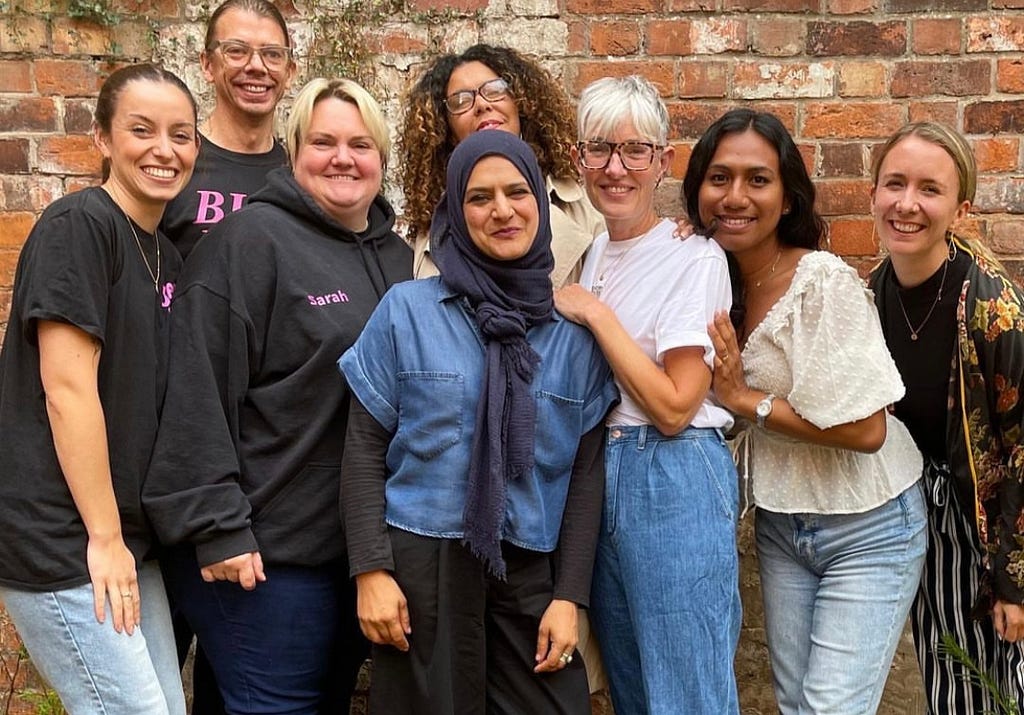
BUT it also made me reflect on the great thing, the best thing, is that people who decide to work in the arts are kind. And I work in one of the most lovely teams. No one pretends and everyone cares. We say when we struggle, we say when something is new and confusing and that takes such a weight off. I really love my job. I love being able to make change in a city which means so much to me. I like that we laugh. I like that we are ready for a fight.
I think what I’m saying is, if you want to be an ED, don’t worry about the day-to-day. If you’ve got a bit of experience of budgets, management & fundraising, you will work out the rest. Focus on the people around you & how the organisation’s mission makes you feel. Everything after that, well, you just add it to the list…
 Strike A Light